Critics Call Shenzhen Summit 'No Substance' as Trump Defends Meeting
Seven Lights
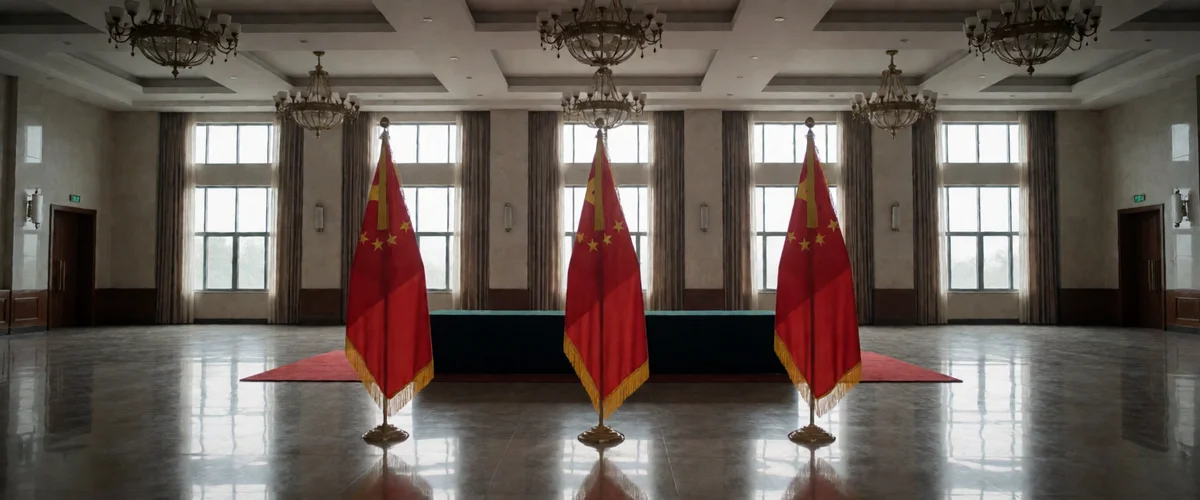
John Bolton, who served as national security adviser in President Trump’s first term, said the trilateral meeting with President Vladimir Putin of Russia and President Xi Jinping of China in Shenzhen produced nothing of consequence. Writing after the hour-and-a-half session on the sidelines of the Asia-Pacific Economic Cooperation summit Thursday, Mr. Bolton said there was “no substance” to the gathering.
The criticism joined a chorus from Europe and Capitol Hill over what the meeting yielded beyond imagery. The Kremlin released a joint statement in which the three leaders “reaffirmed that there can be no winners in a nuclear war, and that it should never be unleashed.” No nuclear arms-control treaty was tabled to replace the agreements that have recently expired, no binding limits on artificial intelligence were proposed, and no framework emerged to end the wars in Ukraine and Iran.
German Chancellor Friedrich Merz called the meeting “simply a photo op.” As the three presidents met, European leaders traveled to Berlin to chart policy on Ukraine without them. Senator Tim Kaine, a member of the Foreign Relations Committee, said the optics troubled him: “Some of the pictures troubled me, seeing the president stand with Putin and Xi, rather than seeing the president stand with the leaders of the global democracies.”
Mr. Trump defended the meeting at a White House briefing Friday, rating it “a 12 on a scale of zero to 10.” He said he and Mr. Xi had agreed to work together on artificial-intelligence guardrails, and discussed the war in Ukraine with Mr. Putin. Kremlin aide Yuri Ushakov said the atmosphere had been “good,” and Russia’s TASS news agency said the war in Ukraine was the main subject and that Mr. Putin left “in an excellent mood.”
Mr. Putin struck a harder note publicly, saying Ukraine and Europe were “not yet ready” to make the compromises needed to end the war, and declaring, “We will not negotiate after the attacks on the Crimean bridge,” a reference to this week’s Ukrainian strike on the Kerch Bridge linking Russia to the occupied Crimean Peninsula.
Skeptics note that the summit’s participants enter it from weakened positions: Russia is bogged down in Ukraine, the United States in Iran, with the Strait of Hormuz a source of economic instability, and China facing a sequence of economic setbacks as bubbles in real estate and technology strain. The comparison some critics drew to Yalta foundered on that point: the 1945 conference balanced power at the end of a war; Shenzhen convened while conflicts were escalating.
The joint statement’s nuclear language echoed past communiqués rather than breaking new ground. European officials said the next measures on Ukraine will be set in Berlin, not Shenzhen.