Nasdaq Erases Its 2026 Gains as AI Sell-Off Deepens
Seven Lights
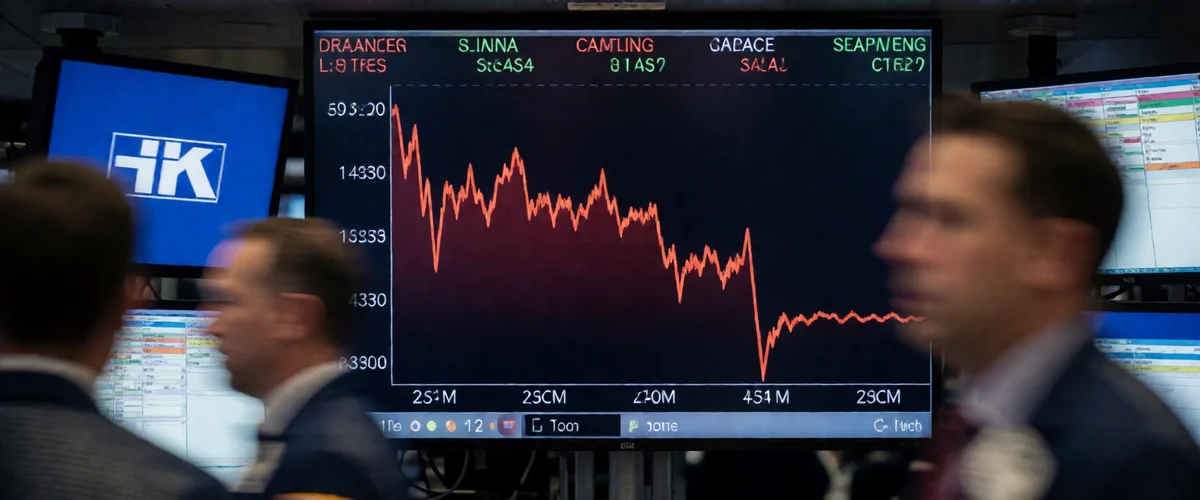
US stocks plunged Friday as the sell-off in artificial-intelligence companies sent Wall Street toward its worst week in more than a year. The Nasdaq Composite fell more than five per cent in late afternoon trading, erasing its gains for 2026. The S&P 500 dropped 3.5 per cent and the Dow Jones Industrial Average 1.7 per cent, leaving both indexes more than ten per cent below their October record highs and in correction territory.
The S&P 500 headed for a seventh consecutive losing session, its longest streak of declines since February 2020, and all three major indexes were on course for their worst weekly percentage losses since April 2025, when the president’s tariff announcement upended global markets. The Dow had already lost about 6.2 per cent this week through Thursday.
Technology stocks led the retreat, and the debut of Anthropic failed to restore confidence in the sector that powered this year’s rally. The maker of the Claude chatbot raised approximately $81 billion in Thursday’s initial public offering, surpassing SpaceX as the largest ever, but the market’s verdict turned within a day. Shares priced at $83 surged more than 30 per cent at the open, surrendered much of that gain Thursday and fell 8.5 per cent Friday, shrinking the debut pop. The slide compounded doubts that the sums flowing into AI companies and infrastructure can produce returns to match their valuations.
Semiconductor makers took the heaviest losses. Nvidia fell about 12 per cent, and Advanced Micro Devices, Broadcom and Micron Technology posted double-digit declines. Amazon and Meta Platforms came under pressure, and AI cloud operators CoreWeave and Nebius fell sharply. Caterpillar declined on concern that slowing data-center investment would weaken demand for power equipment. The rout spread abroad, with Japan’s Nikkei and South Korea’s Kospi each down more than five per cent.
Monetary policy sharpened the selloff. Federal Reserve Governor Lisa Cook said Friday that policy was not sufficiently restrictive for current inflation, and markets priced a more than 95 per cent probability of a rate increase at the central bank’s December meeting. Higher rates cut the present value of future earnings and raise financing costs, a double squeeze on companies pursuing capital-intensive AI expansion.
Critics of the industry found a second theme in the week. Commentators cited Anthropic’s influence over policy and safety debates as a subject markets had not priced. Intuit shares fell after the software company lowered its annual revenue-growth forecast and agreed to sell its Mailchimp unit for about $3.7 billion.
Trading next week opens with the December Federal Reserve meeting in focus and AI names searching for a floor.