No Camp Wins Majority as Israel's Vote Count Grinds On
Seven Lights
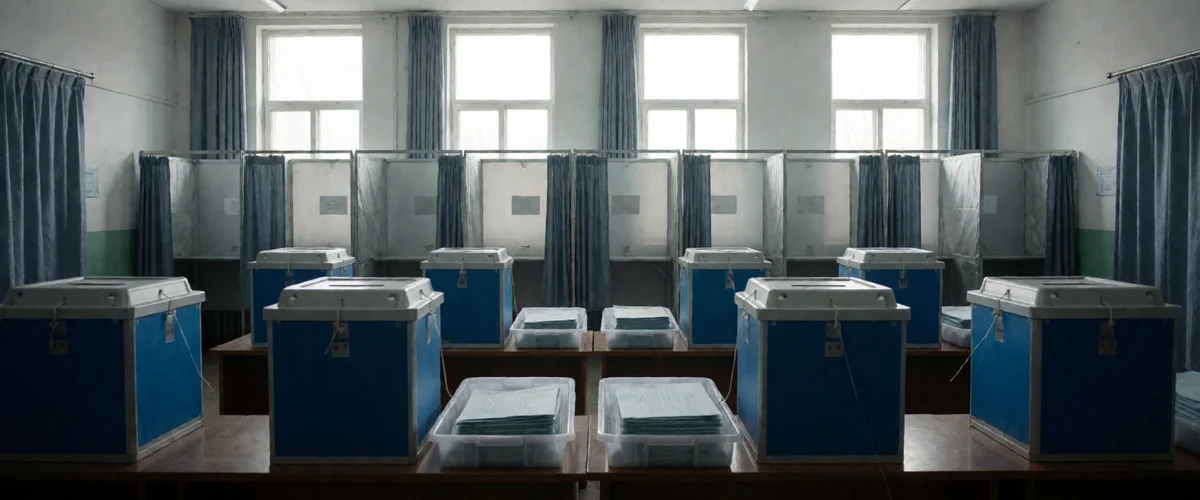
Israel entered a prolonged vote count Wednesday with no camp holding the 61 seats needed for a majority in the 120-seat Knesset, leaving the country facing weeks of uncertainty over who will form a government.
Exit polls published by Israel’s major television networks shortly after polls closed at 10 p.m. local time Tuesday showed Prime Minister Benjamin Netanyahu’s governing bloc and the opposition grouping led by former army chief of staff Gadi Eisenkot tied at about 51 seats each, France 24 reported that some surveys gave the opposition a narrow edge. Turnout exceeded 77 percent of eligible voters, the central elections committee said, about seven percentage points higher than in 2022.
With nearly half the votes counted, official partial results projected Netanyahu’s camp at 56 seats, the opposition bloc at 49 and Arab-aligned parties at 15, Euronews reported. Arab parties, running on separate lists, could win as many as 18 seats, up from 10, the Guardian reported, a rise analysts said will redraw Israel’s political landscape.
The arithmetic favors neither side. Netanyahu’s camp, built on Likud and allied religious parties, is projected to win the most seats by a slight margin, but Israeli exit polls are frequently revised and do not capture absentee ballots. Opposition analysts noted that Likud’s strength is often underestimated. Even a solid opposition showing leaves Eisenkot without a clear path to a majority unless the Arab parties, which have historically stayed outside governing coalitions, sustain him from the outside.
Former government spokesman Eylon Levy said three outcomes remained possible: a Netanyahu-led coalition, an opposition government dependent on smaller parties, or a return to the polls. Netanyahu would remain caretaker prime minister in the interim. The New York Times reported that government formation could take weeks or months under Israel’s consultation process, in which the president tasks the leader best able to command a Knesset majority.
The count was set to continue through Wednesday. Neither camp declared victory, and the parties’ first moves are expected to be exploratory talks with small factions whose support could decide the next government.
Update, Oct. 29: With nearly 86 per cent of votes tallied, Israel’s three main broadcasters projected Mr. Netanyahu’s bloc of right-wing, far-right and ultra-Orthodox parties at 53 seats in the 120-seat Knesset, against 48 for Mr. Eisenkot’s opposition bloc, with parties representing Arab Israelis at an unprecedented 19. The results leave Mr. Eisenkot no realistic path to power without the Arab parties’ broad backing, which most Jewish leaders reject, and Mr. Netanyahu set to remain caretaker prime minister through coalition negotiations and potentially until another election next year.
Addressing Likud members after 3 a.m., Mr. Netanyahu called for “a strong, right-wing national government” and raised the prospect of renewed joint military action against Iran with the United States, saying the two countries had a “singular historical opportunity” to remove the Iranian threat “once and for all.” President Trump, who had urged Israeli voters to keep Mr. Netanyahu in office to “finish the job” in Iran, said the prime minister had done “very well” and claimed his endorsement “helped him a lot.” Mr. Eisenkot said Mr. Netanyahu remained “a caretaker prime minister, without a mandate or the people’s trust,” and called on the security establishment and civil service to “stand firm in the face of any attempt to challenge you.”
The BBC set out the likely courses: a national unity government, an Eisenkot coalition dependent on the Arab parties — the United Arab List, at about seven seats, has offered to join an opposition government, while the 12-seat Joint List would support one from outside — defections of right-wing opposition figures such as Naftali Bennett and Avigdor Lieberman to Mr. Netanyahu, or new elections, which the BBC assessed as the most probable outcome.
Update, Oct. 31: Final results have confirmed the projections, with no clear winner. Mr. Netanyahu’s party and its allies won 53 seats in the 120-seat Knesset, short of the majority needed to form a government, while the main opposition bloc led by Mr. Eisenkot won 48, The New York Times reported. A BBC analysis from Jerusalem called the deadlock “a sign of the country’s deep divisions,” tracing them from the judicial reforms that drew mass demonstrations to the war in Gaza, and reported that President Isaac Herzog — who called the election a “badge of honour” for Israeli society — will open a series of consultations with party leaders next week before tasking a candidate with government formation. France 24 reported the wartime election had left neither side a clear path to power, and the Economist judged the result, for Mr. Netanyahu’s opponents at least, a matter of unfinished business rather than defeat.